

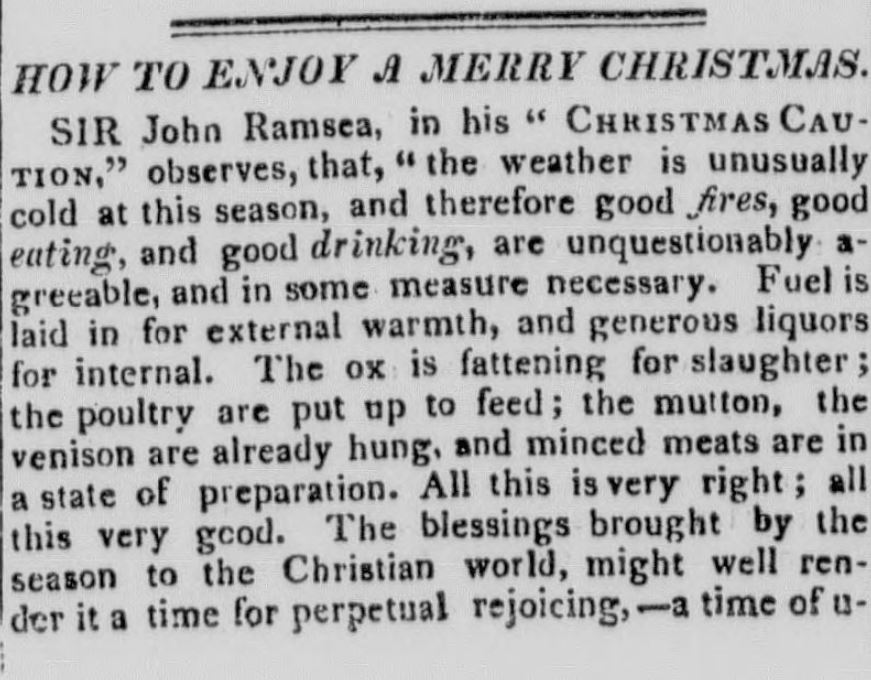
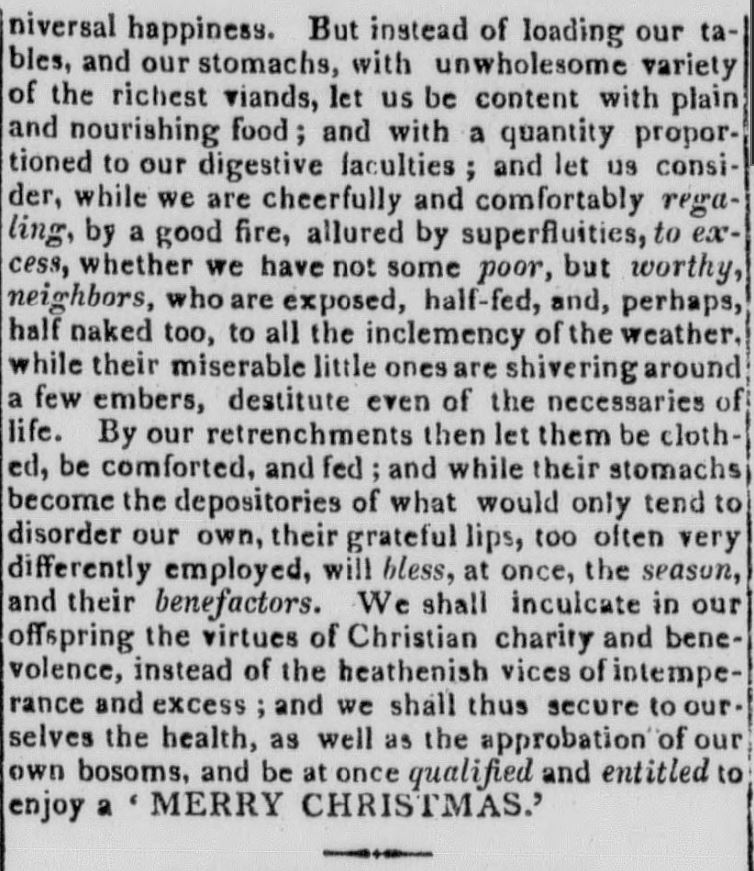
Sir John Ramsea, in his “CHRISTMAS CAUTION,” observes, that, “the weather is unusually cold at this season, and therefore good fires, good eating, and good drinking, are unquestionably agreeable, and in some measure necessary. Fuel is laid in for external warmth, and generous liquors for internal. The ox is fattening for slaughter; the poultry are put up to feed; the mutton, the venison are already hung, and minced meats are in a state of preparation. All this is very right; all this very good. The blessing brought by the season to the Christian world, might well render it a time for perpetual rejoicing,—a time of universal happiness. But instead of loading our tables, and our stomachs, with unwholesome variety of the richest viands, let us be content with plain and nourishing food; and with a quantity proportioned to our digestive faculties; and let us consider, while we are cheerfully and comfortably regaling, by a good fire, allured by superfluities, to excess, whether we have not some poor, but worthy, neighbors, who are exposed, half-fed, and, perhaps, half naked too, to all inclemency of the weather, while their miserable little ones are shivering around a few embers, destitute even of the necessaries of life. By our retrenchments then let them be clothed, be comforted, and fed; and while their stomachs become the depositories of what would only tend to disorder our own, their grateful lips, too often very differently employed, will bless, at once, the season, and their benefactors. We shall inculcate in our offspring the virtues of Christian charity and benevolence, instead of the heathenish vices of intemperance and excess; and we shall thus secure to ourselves the health, as well as the approbation of our own bosoms, and be at once qualified and entitled to enjoy a ‘MERRY CHRISTMAS.’
American watchman and Delaware advertiser. [volume] (Wilmington, Del.), 23 Dec. 1823.
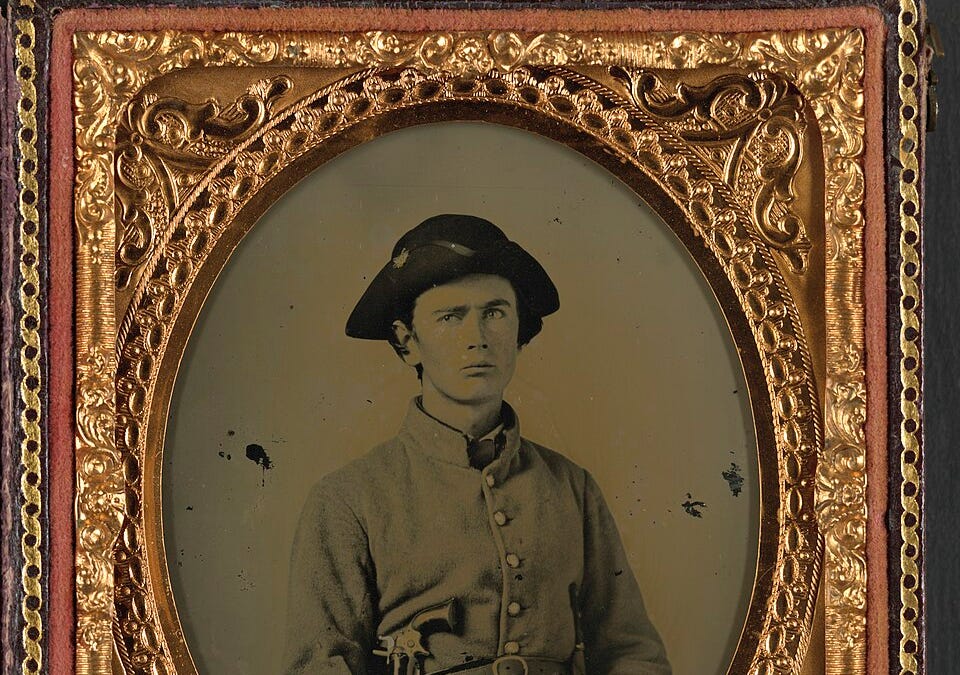
In the aftermath of the American Civil War, personal accounts from soldiers offered raw glimpses into the brutal realities of conflict, far removed from romanticized histories. George Cary Eggleston’s Southern Soldier Stories captures the unvarnished experiences of Confederate troops, emphasizing not just battles but the everyday struggles against scarcity and deprivation. This excerpt from his collection, titled “Random Facts,” vividly illustrates the ingenuity and endurance of Southern soldiers amid profound shortages—of clothing, medicine, ammunition, and even food—highlighting how necessity forged both practical innovations and spiritual resilience. It serves as a poignant reminder of the human cost of war, where survival often depended on makeshift solutions and unyielding determination.
https://humblymybrain.substack.com/p/confederate-soldiers-hardships-scarcity