

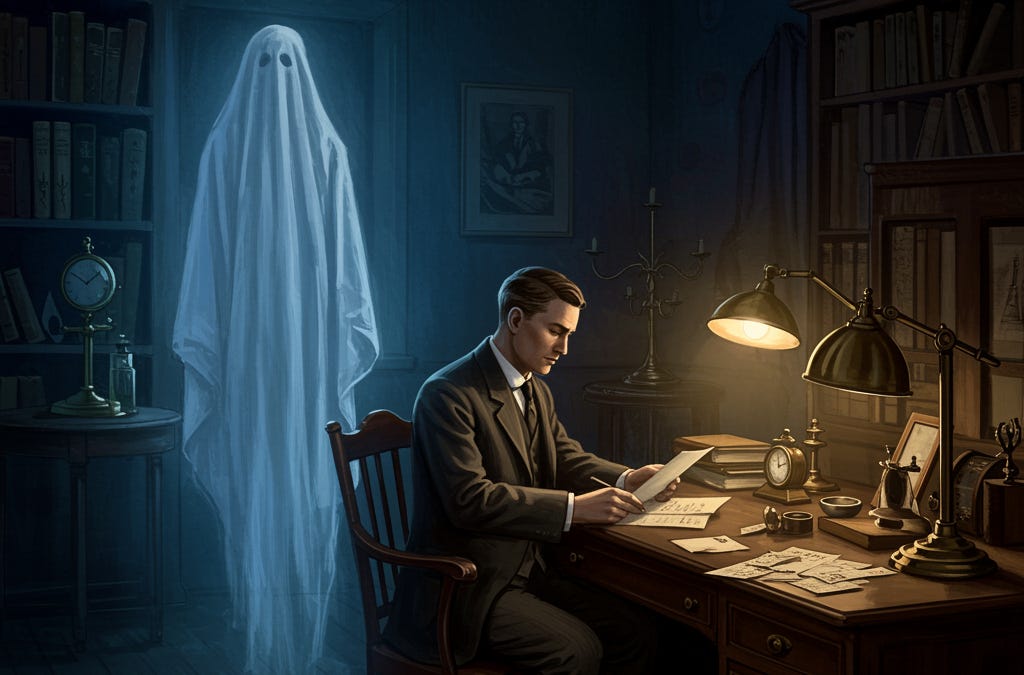
What is a ghost? For centuries, this simple question has haunted the edges of human belief—dismissed by skeptics as superstition, yet stubbornly persistent in personal accounts, folklore, and now, early scientific inquiry. In an era when microbes were just beginning to reveal their invisible power, pioneering investigators dared to ask whether apparitions might be equally real. Hereward Carrington’s 1915 classic True Ghost Stories cuts straight to the heart of the mystery with refreshing clarity and intellectual honesty. This excerpt introduces the core questions every thoughtful person eventually confronts about ghosts, then traces the shift from folklore to organized psychical research. It challenges the cartoonish “sheet-and-chains” stereotype and invites readers to weigh the accumulating evidence of apparitions that coincide, to the minute, with death. Whether you come as a believer, a doubter, or simply a curious mind, Carrington’s calm, evidence-based approach still feels remarkably modern more than a century later.
https://humblymybrain.substack.com/p/what-is-a-ghost-real-ghost-stories
In the aftermath of the American Civil War, personal accounts from soldiers offered raw glimpses into the brutal realities of conflict, far removed from romanticized histories. George Cary Eggleston’s Southern Soldier Stories captures the unvarnished experiences of Confederate troops, emphasizing not just battles but the everyday struggles against scarcity and deprivation. This excerpt from his collection, titled “Random Facts,” vividly illustrates the ingenuity and endurance of Southern soldiers amid profound shortages—of clothing, medicine, ammunition, and even food—highlighting how necessity forged both practical innovations and spiritual resilience. It serves as a poignant reminder of the human cost of war, where survival often depended on makeshift solutions and unyielding determination.
https://humblymybrain.substack.com/p/confederate-soldiers-hardships-scarcity