

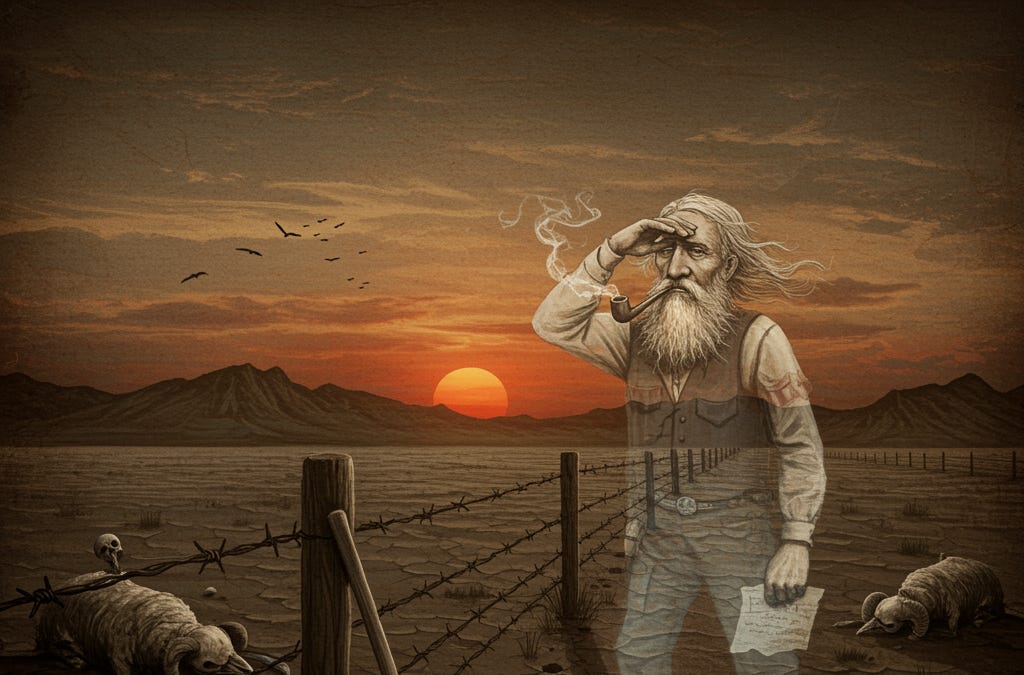
In the vast, unforgiving expanses of the American West, where barbed wire fences stretched like endless promises across the plains and mountains, frontier legends were born from equal parts hardship, absurdity, and dark comedy. Frank Benton’s Cowboy Life on the Sidetrack (1903) is a rollicking, sarcastic chronicle of stockmen’s misadventures, blending real cowboy grit with over-the-top yarns that poke fun at the sheep business, range wars, and the sheer ridiculousness of trying to tame the open range. Chapter XII, “The Post-Hole Digger’s Ghost,” stands out as one of its most memorable tall tales: a ghostly German laborer doomed to dig post-holes forever toward the setting sun, a vanishing jackrabbit recipe, and two hapless sheepherders who meet a grim fate along an infinite fence line. This excerpt is pure frontier folklore—exaggerated, poignant, and hilariously bleak—perfectly illustrating Benton’s knack for turning the trials of the West into biting satire.
https://humblymybrain.substack.com/p/the-post-hole-diggers-ghost-the-endless
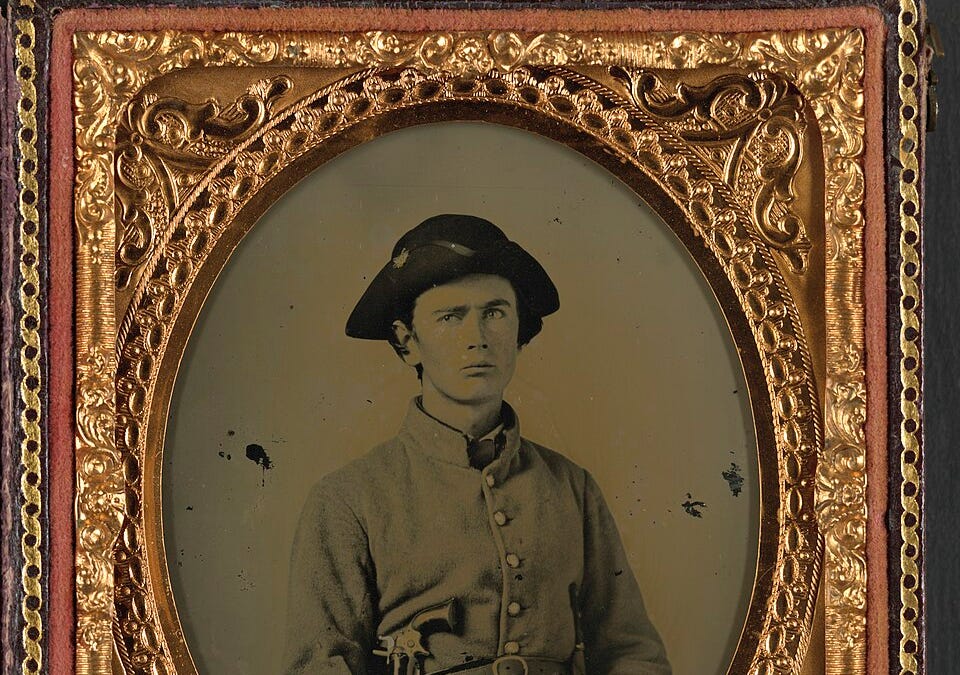
In the aftermath of the American Civil War, personal accounts from soldiers offered raw glimpses into the brutal realities of conflict, far removed from romanticized histories. George Cary Eggleston’s Southern Soldier Stories captures the unvarnished experiences of Confederate troops, emphasizing not just battles but the everyday struggles against scarcity and deprivation. This excerpt from his collection, titled “Random Facts,” vividly illustrates the ingenuity and endurance of Southern soldiers amid profound shortages—of clothing, medicine, ammunition, and even food—highlighting how necessity forged both practical innovations and spiritual resilience. It serves as a poignant reminder of the human cost of war, where survival often depended on makeshift solutions and unyielding determination.
https://humblymybrain.substack.com/p/confederate-soldiers-hardships-scarcity