

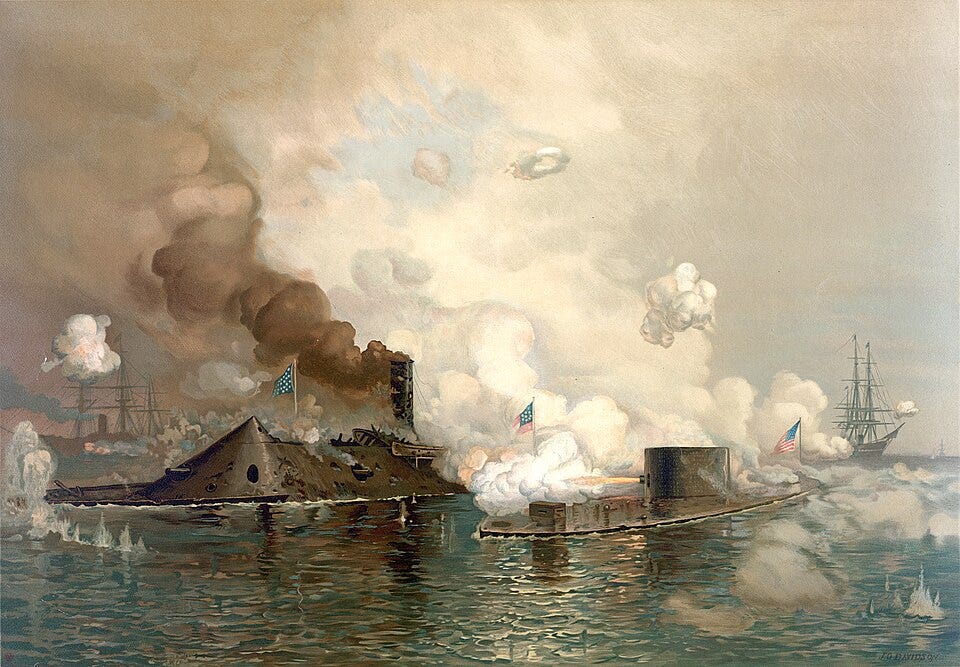
In March of 1862, naval warfare was transformed when the ironclad CSS Virginia, accompanied by five other gunboats, sailed into Hampton Roads, Virginia, on a mission to destroy the Federal navy blockading the waterways. After a stunning first day of death and destruction on March 8, dealt out by the CSS Virginia—where five Federal ships could do little to stop the Confederate navy’s advance upon Newport News—the world witnessed the first clash between two ironclad naval vessels on March 9, after the USS Monitor arrived on the scene. Both the CSS Virginia and the USS Monitor proved their value and worth in building a new iron navy and assisted in settling the debate as to their effectiveness.
https://humblymybrain.substack.com/p/revolution-at-sea-the-1862-battle
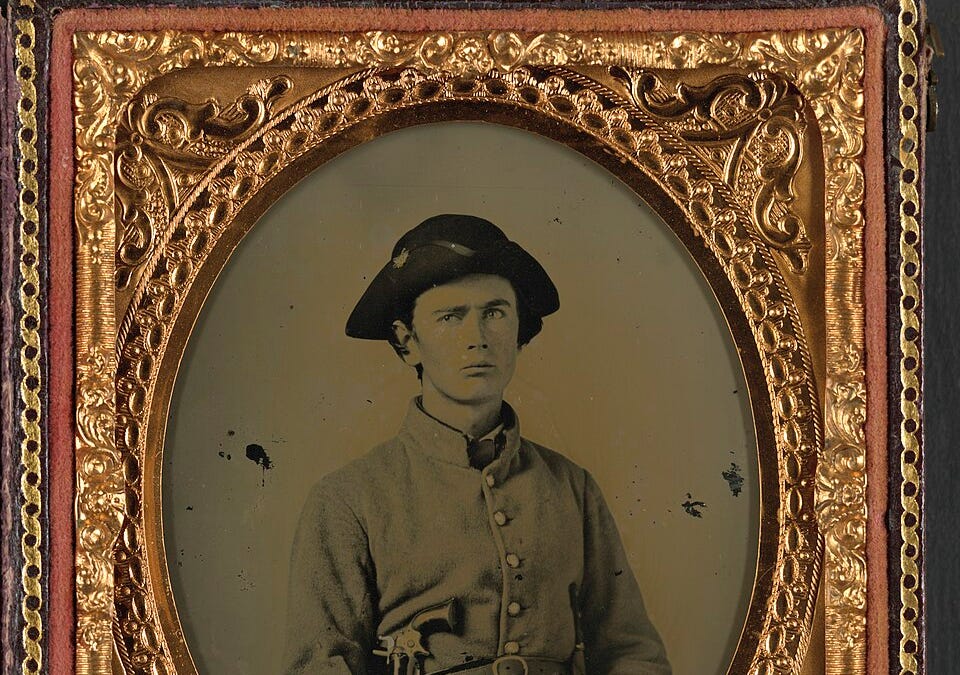
In the aftermath of the American Civil War, personal accounts from soldiers offered raw glimpses into the brutal realities of conflict, far removed from romanticized histories. George Cary Eggleston’s Southern Soldier Stories captures the unvarnished experiences of Confederate troops, emphasizing not just battles but the everyday struggles against scarcity and deprivation. This excerpt from his collection, titled “Random Facts,” vividly illustrates the ingenuity and endurance of Southern soldiers amid profound shortages—of clothing, medicine, ammunition, and even food—highlighting how necessity forged both practical innovations and spiritual resilience. It serves as a poignant reminder of the human cost of war, where survival often depended on makeshift solutions and unyielding determination.
https://humblymybrain.substack.com/p/confederate-soldiers-hardships-scarcity