


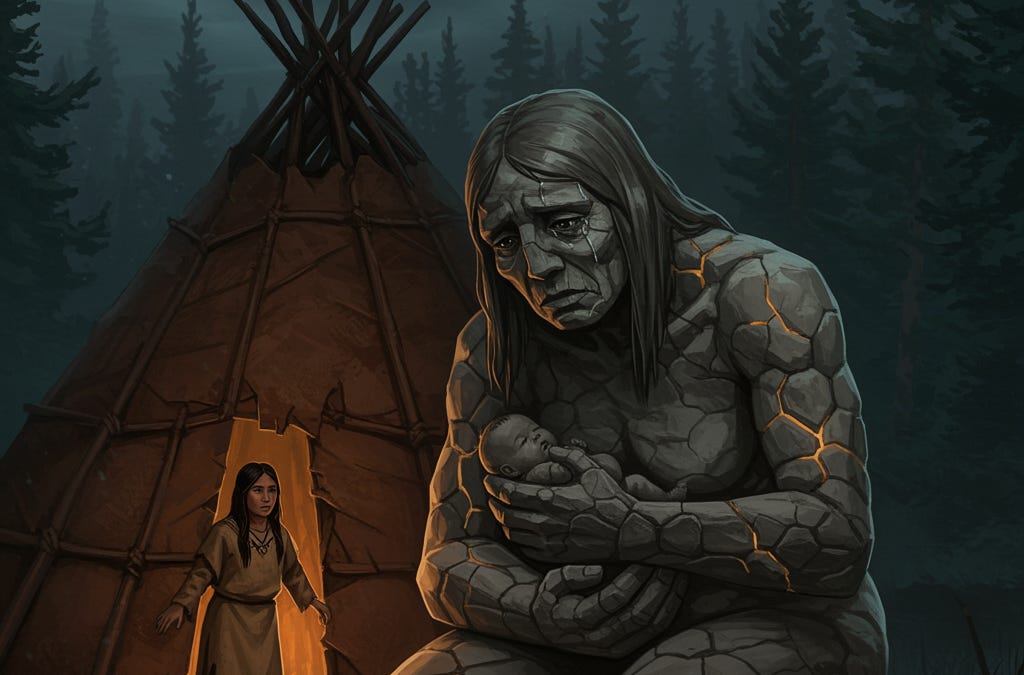
In the rich tapestry of North American Indigenous storytelling, few figures loom as large—or as literally—as the Stone Giants of Iroquois lore. These colossal, rock-hard beings embodied both terror and tragedy, often representing forces of nature or moral peril. This tale from Chapter XXIII of Henry Wysham Lanier’s A Book of Giants (drawn from Lewis Spence’s The Myths of the North American Indians) offers a rare glimpse into a more nuanced side of these mythical creatures: not just mindless destroyers, but beings capable of desperation, alliance, and redemption. Through the encounter between a compassionate hunter’s wife and a fleeing Stone Giantess, the story explores themes of hospitality, trust across divides, survival, and the power of unity against greater threats. It reminds us that even in ancient legends, monsters can be mothers, refugees, and unexpected allies.
https://humblymybrain.substack.com/p/the-stone-giantess-a-compassionate
In the aftermath of the American Civil War, personal accounts from soldiers offered raw glimpses into the brutal realities of conflict, far removed from romanticized histories. George Cary Eggleston’s Southern Soldier Stories captures the unvarnished experiences of Confederate troops, emphasizing not just battles but the everyday struggles against scarcity and deprivation. This excerpt from his collection, titled “Random Facts,” vividly illustrates the ingenuity and endurance of Southern soldiers amid profound shortages—of clothing, medicine, ammunition, and even food—highlighting how necessity forged both practical innovations and spiritual resilience. It serves as a poignant reminder of the human cost of war, where survival often depended on makeshift solutions and unyielding determination.
https://humblymybrain.substack.com/p/confederate-soldiers-hardships-scarcity