

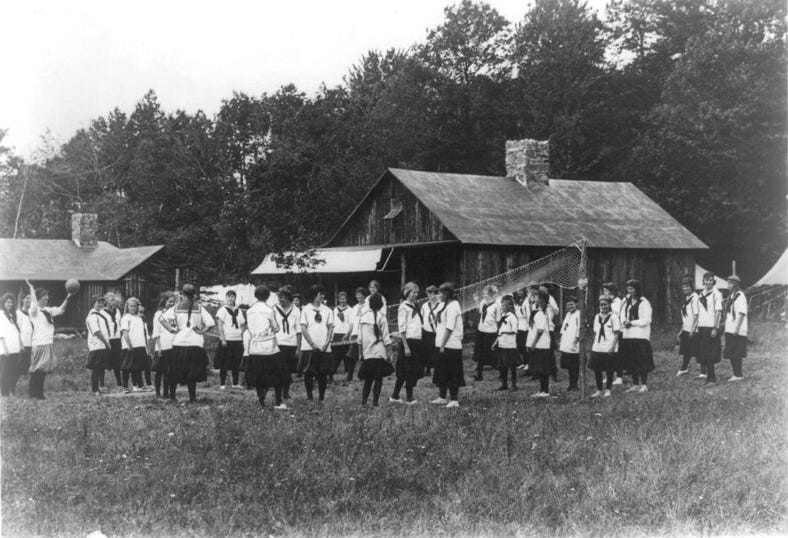
Volleyball, invented in 1895 by William G. Morgan as a less strenuous alternative to basketball, quickly evolved from a casual recreational activity into a structured team sport embraced by diverse groups. Early accounts from the 1910s highlight its simplicity and adaptability, making it ideal for indoor settings with varying player numbers. For instance, in 1911, Claude H. Miller described it as an “extremely simple” game playable by “any number of players” on a 25 by 50-foot court, where the objective was merely to pass a lightweight ball over a 7-foot net without letting it touch the floor, resembling elements of tennis and handball—emphasizing its appeal for gymnasiums and inclusivity without rigid team sizes. By 1917, as the sport gained traction among women and those seeking gentler exercise, Mary C. Morgan noted its rapid popularity for girls, combining tennis and handball while being safe for the “young and those who are weakly,” with no bodily contact and ...
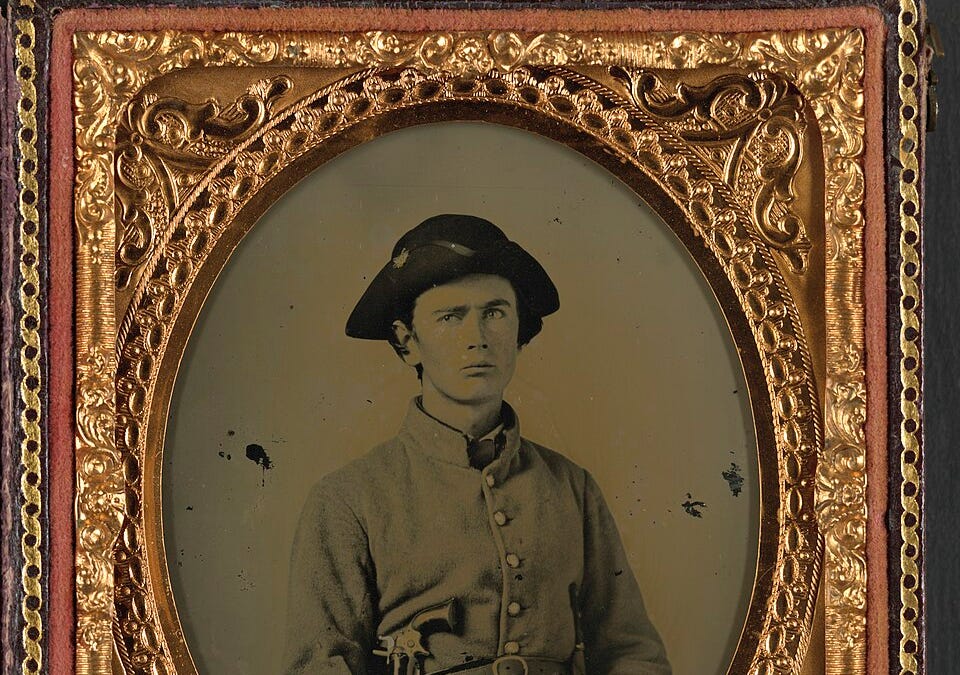
In the aftermath of the American Civil War, personal accounts from soldiers offered raw glimpses into the brutal realities of conflict, far removed from romanticized histories. George Cary Eggleston’s Southern Soldier Stories captures the unvarnished experiences of Confederate troops, emphasizing not just battles but the everyday struggles against scarcity and deprivation. This excerpt from his collection, titled “Random Facts,” vividly illustrates the ingenuity and endurance of Southern soldiers amid profound shortages—of clothing, medicine, ammunition, and even food—highlighting how necessity forged both practical innovations and spiritual resilience. It serves as a poignant reminder of the human cost of war, where survival often depended on makeshift solutions and unyielding determination.
https://humblymybrain.substack.com/p/confederate-soldiers-hardships-scarcity