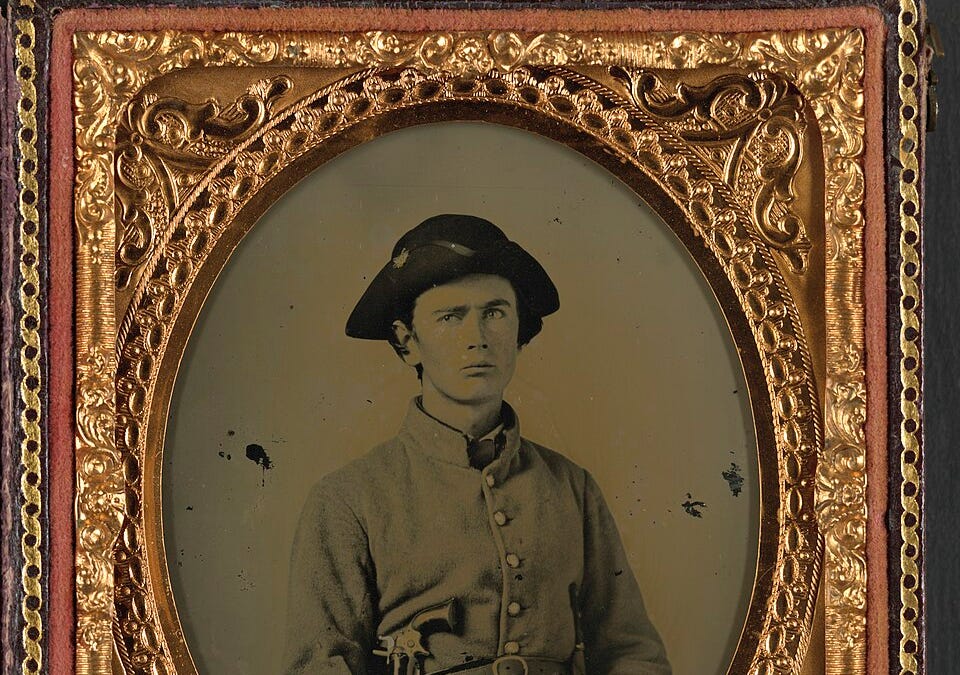


The American people were composed of various immigrants—from British, German, Scottish, Irish, African, and other backgrounds—who brought with them their individual cultures, traditions, religions, and ideals to the New World. This diverse population included laborers, indentured servants, slaves, aristocrats, indigenous peoples, and criminals, all intermingling and struggling to forge new lives in this veritable melting pot. The Revolutionary War and the independence gained from Great Britain granted more than liberty to the individual states and their citizens; it also established a precedent for a new national identity.
https://humblymybrain.substack.com/p/from-division-to-patriotism-the-role

In the aftermath of the American Civil War, personal accounts from soldiers offered raw glimpses into the brutal realities of conflict, far removed from romanticized histories. George Cary Eggleston’s Southern Soldier Stories captures the unvarnished experiences of Confederate troops, emphasizing not just battles but the everyday struggles against scarcity and deprivation. This excerpt from his collection, titled “Random Facts,” vividly illustrates the ingenuity and endurance of Southern soldiers amid profound shortages—of clothing, medicine, ammunition, and even food—highlighting how necessity forged both practical innovations and spiritual resilience. It serves as a poignant reminder of the human cost of war, where survival often depended on makeshift solutions and unyielding determination.
https://humblymybrain.substack.com/p/confederate-soldiers-hardships-scarcity